Care Is Revolutionary

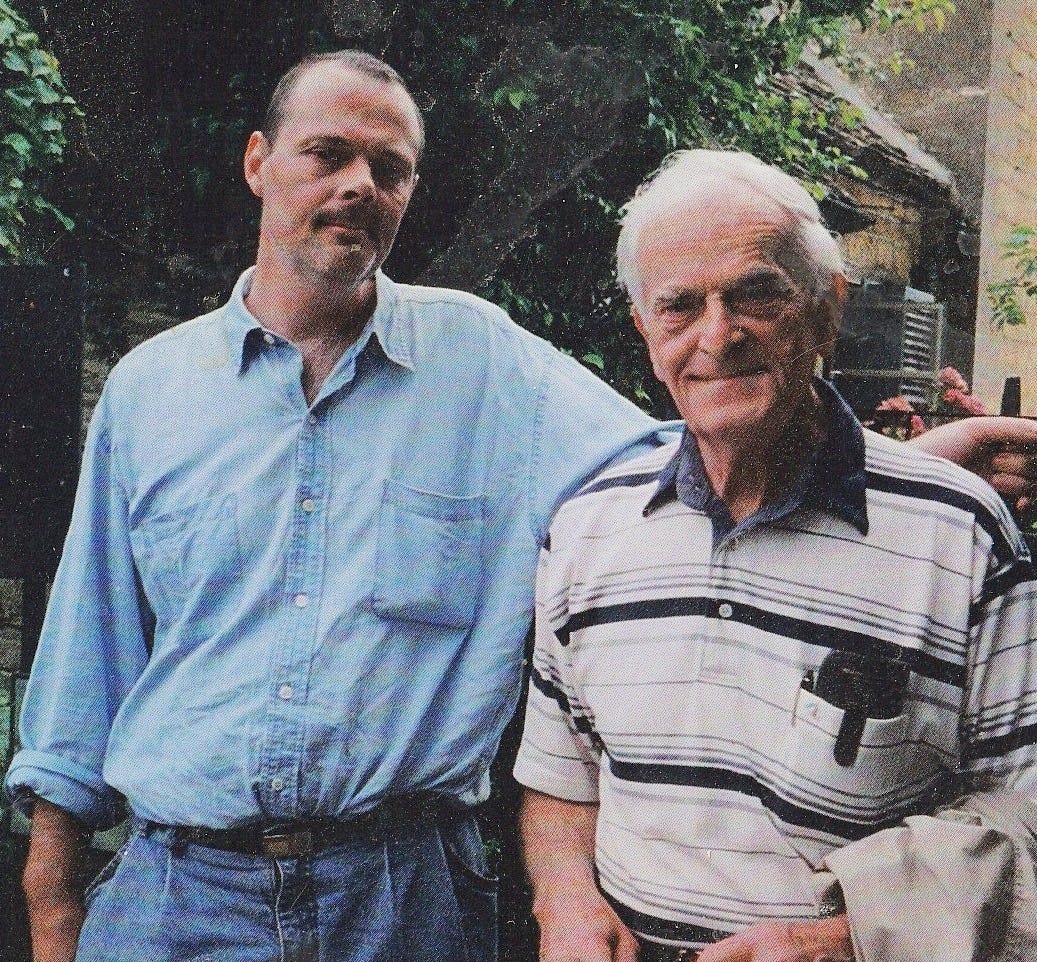
I am alive at sixty-two, albeit much the worse for wear. So I know my brother Peter, who died at fifty, drew the shortest of straws. He was diagnosed with schizophrenia at the age of thirty. Like today, 1989 was not kind to those living with mental illness. The state provided few resources for either those who were ill or their family members.
My parents became my brother’s caregivers and devoted the last eighteen years of their marriage to Peter’s well-being, until my mother died in 1999. After her death, my dad continued alone, and he did so willingly, gently, and with immense compassion.
Next Wednesday would have been my father’s 103rd birthday.
My father’s socialism was not abstract. It was reflected in how he cared for my brother — and later for my mother in her final years.
When Peter died at fifty, my father and I became what I once called “a party of two.” In time, I became my father’s caregiver, returning the gift he and my mother had given Peter. Caregiving may not be what we expect our lives to deliver, but I am glad I became my father’s caregiver. I believe it made me a better, more self-aware man.
Here is my dad’s own account of why he and my mother chose to stand by Peter — and what that decision meant.
It was twenty-six years ago — eighteen months into my retirement — when my wife and I discharged our son, Peter, from a psychiatric ward for the first time. My lad had just spent a fortnight in a secure mental health ward after a severe psychotic episode that caused him to speak in tongues, shave all his body hair, and claim he was the messiah, willing to die for the world’s sins.
Before my son’s release, his psychiatrist informed my wife and me that Peter was suffering from schizophrenia. “I must warn you,” said the consultant, “this disease can cause great anguish. However, with proper vigilance, a sufferer’s life can be filled with purpose, accomplishment and happiness.”
For the moment, he advised us that the best place for our son to learn to cope with his “new normal” was in our stable and loving environment in the country. “This disease,” he said as we left his consulting room, “isn’t pretty or kind, and it will change his life irrevocably, but it will also change yours as well.”
We felt like sailors on a small skiff caught in a never-ending tempest.
That day, when I helped Peter into the back seat of our car with great delicacy, I remembered how I had shown the same care when he first came home with us as a new born. When we drove off, Peter, stunned from the antipsychotic drugs, placed his head in my wife’s lap. Looking back, I am glad I did not know what the future had in store for me at sixty-six, my sixty-one-year-old wife, or my thirty-year-old son, because it would have made our voyage through mental illness all the more painful.
During the first years of my son’s illness, it was as though an Arctic winter had descended on our home. My wife, Frieda, and I lost track of time. We stopped travelling abroad and curtailed the many interests that had made retirement pleasant, as caring for Peter became a full-time commitment.
The voices my son heard in his head were persistently cruel, and there were many nights when I slept beside him, at his insistence, to stop him from self-harming.
Sadly, each of us lost most of our old friendships, because mental illness is often treated as leprosy was in the nineteenth century — an affliction to be isolated from society. I do not think my wife and I could have survived our son’s disease had it not been for the strength of our marriage.
There were moments of anger, grief, and recrimination between us. Fortunately, they did not last long. Our love had been forged in the struggles that followed the Second World War, when trials and tribulations were a daily occurrence for my generation. What my wife and I encountered during the worst moments of Peter’s illness was not pleasant. But it was nothing compared to what our son shouldered — a mental anguish as acute as fire burning through flesh.
Yet I believe my son was more fortunate than many who suffer from schizophrenia because, before he was struck with the illness, he had been a visual artist. During brief moments when his condition crested into calmer waters, he returned to his art. In detailed drawings, Peter sketched the demons that plagued his mind when he was imprisoned in the solitary confinement of extreme mental illness.
Over time, and through advancements in drug therapy, Peter regained more independence and greater confidence to resume his life. After ten years of living with us, he married his long-term girlfriend, who also suffered from mental illness. Tragically, a month after Peter’s wedding, my wife died from cancer. Five years later, Peter — having battled schizophrenia to a draw — died when he developed idiopathic pulmonary fibrosis, which destroyed his lungs.
After Peter’s death, among his papers, I found a note he had sent to a gallery curator about his life and art. It gave me great comfort:
“I am not a pessimist, because I know that all of us are constantly changing through the passage of time or from experience. I don’t know how long I have left to live, but my existence has been a good experience rather than a bad one, even with the dreaded schizophrenia, so I am glad to be alive because all in all, it’s been a fucking blast.”
Thank you for reading and for helping to continue my father’s legacy.
Your support keeps me housed and allows me to finish the work I began with my dad in 2010. Like many, I have faced serious health challenges — a heart attack at forty-two, cancer at fifty-seven, and interstitial lung disease at fifty-nine. Staying afloat has not always been easy.
If you are able, please consider a paid subscription — £3.50 a month or £30 a year (adjusted to your local currency). I have reduced the annual price by twenty per cent to make it more accessible.
This month is a tight one. There are prescriptions to cover and rent approaching quickly.
There is also a tip jar for anyone who feels inclined.
On brighter news: The Green & Pleasant Land is complete in beta form and currently with publishers. It will be published this year, and everyone who helped make it possible will be acknowledged in the book. If you would like a beta e-copy, just let me know.
My father’s story — and that of his working-class generation — must be remembered if we are to resist today’s fascists.
Take care,
John
thanks for keeping your mind strong and continuing to write and shout. My dad would have been 103 yesterday, so much synchronicity in their experiences - my dad from your mother's country and my mother from your dad's county. Give yourself praise because of your writing and efforts that have given them immortality.
A very moving description of the difficulties faced in life with a schizophrenia sufferer, thank you. I will be 65 in July and like you I'm suffering from a variety of physical ailments, but thankfully my mental health still holds up - just about. Watching a loved one go through mental illness must be true agony.