I Became Your Comrade
Letters Written During Cancer and Covid

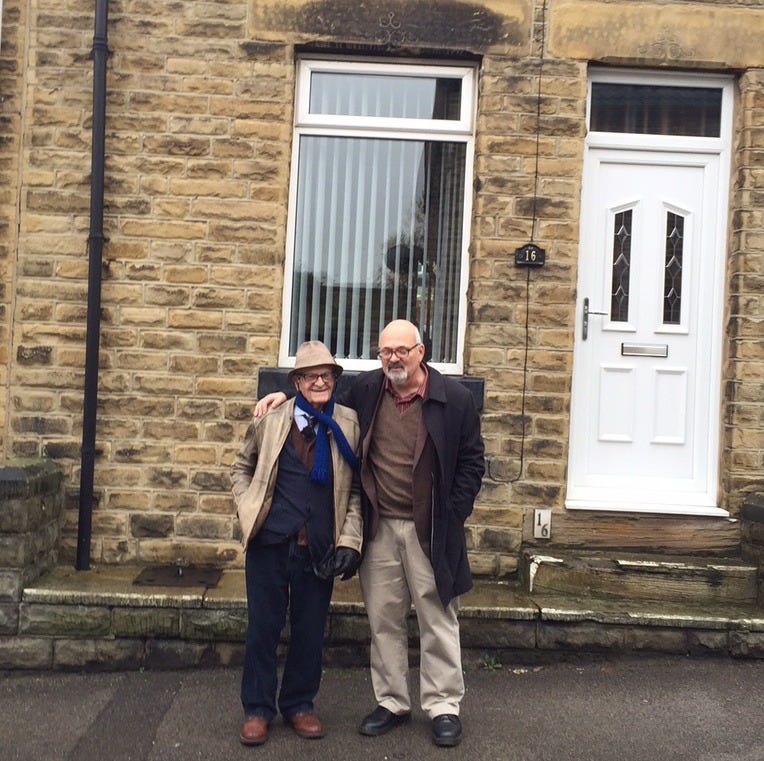
I was diagnosed with rectal cancer a few weeks before Covid-19 struck in 2020. Within months, streets emptied, hospital corridors filled, and fear became airborne. It was as momentous as the Great War that remade the twentieth century. The world that existed before it is gone.
As the world shut down, my own body was already closing in on itself.
During that first year of Covid-19, I wrote letters to my dead father. I explained what had happened to the world since his death and wondered what would become of his “Last Stand” in a society transformed by plague. Writing was how I endured the loneliness of cancer recovery. They eventually formed my book Standing With Harry. What follows is one of those letters.
After Peter died, I began thinking about making your life public. I was afraid you would be next. Five months later, I was rushing you to a Portuguese hospital.
Grief, age, and a lifetime of smoking caught up with you on a day we were meant to picnic along the Algarve coast. After breakfast, you said you couldn’t walk. Pain gripped your right calf. With your peripheral vascular disease, I knew the danger. I drove you to a private hospital, fearing a state facility might expose you to infection.
While you were being treated in A&E, I was ushered to billing. They placed a hold on my Visa card and warned that if it could not take a €5,000 charge, “you must find your father another hospital.”
Every blood test, bottle of water, doctor’s visit, nurse’s visit, and meal was itemised on your bill at the private hospital in Porto Mau. You were served swordfish for dinner and imported Scottish oat porridge for breakfast, laid out on fine bone china. It felt like a Fairmont hotel — except you couldn’t check the mounting bill online.
You would ask, “Is this going to be expensive?” I always laughed and said it was cheap as chips. The cost didn’t matter. I would not quibble over euros while your life was on the line. I refused to let money — or half-hearted advocacy — decide whether you lived or died.
Money, age, and your comorbidities would not stop me from keeping you alive and content for as long as there was spirit in you. I owed you that — as my father and as the man who had cared for Mum and Pete. Whatever time you had left would be purposeful. And to hell with the expense. You were entitled to as many kicks at the can as life would allow.
While you were in hospital, I stayed in a cheap hotel nearby, eating sandwiches from a local grocery and washing them down with Sagres beer.
I didn’t know if you would survive the clot. Still reeling from Pete’s death, I even asked where I could have you cremated if you died in the Algarve. The local ex-pats recommended a cheap crematorium in the hills for when one of their alcohol-sodden own “popped their clogs.”
The thought of losing you so soon after Peter terrified me. If you died, I would be severed from the last living link to my family. I would be cast adrift.
I began to understand that if you were to survive with dignity, I had to become more than your son. I had to become your comrade.
On the fifth day, your Portuguese doctor told me to book our flight to Toronto. You were to leave directly from the hospital for the airport in Faro.
The next day, I booked a flight to Glasgow, connecting 24 hours later to Toronto. Before your discharge, I went to accounts and paid €7,000 on my credit card. It was a large sum for us. You had some savings; I did not. For twenty-five years, I had held jobs with big titles and small pay.
When I inserted my card into the machine, I was afraid the payment would be declined. For a moment, I imagined having to sneak you out because we could not pay.
The payment went through, and we were free to leave. I knew it had pushed us closer to insolvency. But you were alive. My priority was simple: keep you on the right side of the ground and content to remain there.
As we left the hospital, you asked what it had cost. I said, “Not much.” I did not want to worry you. What we had paid to keep you alive in Portugal reminded me of something you learned as a child without public healthcare: longevity is often a privilege of those who can afford it.
That morning, you were lifted onto the plane by a scissor lift.
“They think I’m one of the bloody dinner trays,” you said as they hoisted you aboard.
A few hours later, we landed in Glasgow. In our airport hotel room, you told me, “I’m not ready to die yet. Your old man will stick around a while longer.”
After that, whenever you were admitted to hospital, you said the same thing — until your final admission in November 2018, when you didn’t.
That night, while you slept, I lay awake, thinking about what had happened and what was coming. The responsibility settled heavily. I could no longer be just your companion. I had to become your carer and put your needs before my own.
You had only me. Your friends were gone. Mum was gone. Peter was gone.
I thought about the two years after Peter died. We tried to keep him alive, and despite all our love and effort, he slipped away. We fled to Portugal weeks after his funeral, hoping sun and cheap wine might dull the loss. It didn’t. Grief followed us everywhere.
We were broken and running on fumes. I drank. You smoked. We fought each other and ourselves because we could not accept that his life had drained from ours so quickly.
You had endured the Great Depression, the Second World War, and the hard peace that followed. You built a middle-class life in Canada after leaving England in the 1950s. You believed you had paid your dues. All you asked was the natural order — that sons bury their fathers.
Before I fell asleep, I knew one thing: I would not let you go to your death alone or angry at a world that did not know you had once lived. I would find a way for both of us to be redeemed.
Thank you for reading and for supporting Harry’s Last Stand. I use this Substack to preserve and promote the legacy of my father, Harry Leslie Smith, who spent the final decade of his life warning that we must not allow his past to become our future. Sadly, we have already crossed that territory. But resistance comes from remembering our working class history and using it to overcome today’s fascism.
If you’re able, please consider a paid subscription — £3.50 a month or £30 a year (converted to your currency). I’ve reduced the annual price by 20% to make it more accessible, also I have some prescriptions to pay for this month and the month is short. So rent day fast approaches.
There is also a tip jar for anyone who feels inclined.
On brighter news: The Green & Pleasant Land is now complete in beta form and with publishers. It will be published this year, and everyone who helped make it possible will be acknowledged in the book.
My father’s story — and that of his working-class generation — must be remembered if we are to resist today’s fascists. If you’d like a beta e-copy, just let me know.
Take care,
John
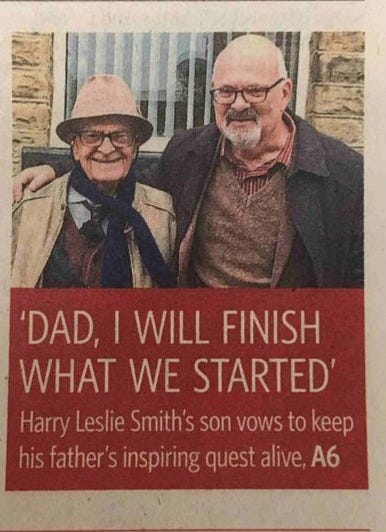
Humanity flies off the page. It is incredibly real. It is beautiful, heartfelt, writing.
Such a gritty, touching, humbling essay.
You and your father were so fortunate to have had one another.