Normal Was Built On Neoliberal Quicksand

The sun is out today, but March wears spring as if it were winter. It’s been too bleak for too long and grinds my bones. These last six years have gnawed at us like crows on a carcass.
On this day six years ago, there was intermittent rain. I watched it splatter against the window from my hospital bed.
March 27th is a milestone because, in 2020, I was operated on for rectal cancer. Since then, I’ve traversed the badlands of cancer thanks to the expertise of my oncology team and a shit load of luck.
But I am still alive, and that matters. I don’t take it for granted or lament it, even when I’m depressed or feeling hopeless, because being dead is for keeps.
In May, I will return for another CT scan to ensure the cancer hasn’t returned. The last scan found something growing on my liver, but it was too small to determine if it was friend or foe. This scan will also determine if the fibrosis in my lung has spread or continues its slow work of asphyxiation.
Following my cancer operation, it took a year to recover and find my new normal. As it was the time of COVID-19 lockdowns, much of that recovery was done alone. During that time, I kept a journal that I later turned into a book.
Below are some excerpts. But before then a few sentences about funding. Once again sorry for this but Substack is now much of my income outside of the pension I took early at 60 and won’t become a full pension at 65.
It’s the end of the month, and paying my rent is a pressing concern because the cost of living crisis worsens each day. So, if you can, please subscribe or tip. It helps keep the legacy of Harry’s Last Stand alive, including six books, the recently edited The Green & Pleasant Land, and my two books written after his death. Your support keeps me housed and going. Things are so touch and go that a full years subscription is 40% off which makes it £12 for the year.
Take care,
John
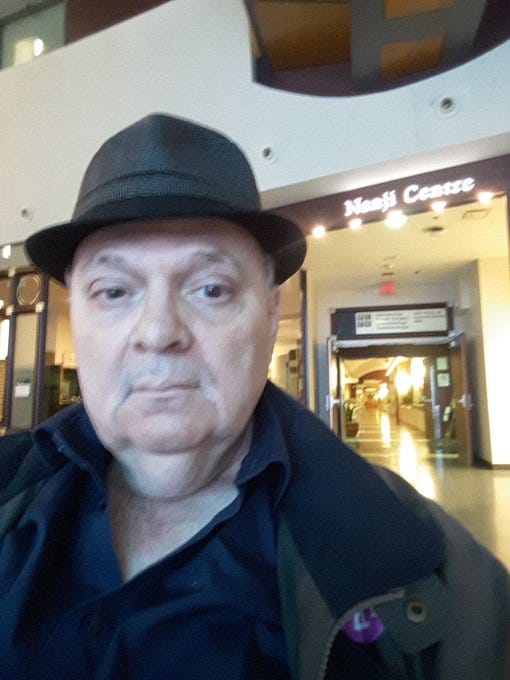
(Selfie taken March 27, 2020 an hour or so before rectal cancer surgery)
March 2020
The week before my surgery, COVID-19 dominated the news. The death toll was enormous, with endless B-roll of body bags.
I stopped talking to most of my friends because their panic over their own mortality erased any empathy for my possible death from cancer.
Forty-eight hours before my scheduled operation, my surgeon’s secretary informed me the hospital had cancelled all “elective surgeries.” They were concerned that newly infected patients would overwhelm ICUs, as they had in the US, Spain, and the UK.
I knew I was fucked because, without timely surgery, the cancer inside me would grow, making it harder to eradicate. At an earlier consult, the surgeon had told me that without surgery, I’d be dead within 18 months.
I had no idea how long I’d wait for a new surgery date, or whether, in the meantime, I’d get COVID-19 and die or be left debilitated.
Each day my surgery was delayed was another day for malignant cells to multiply.
Without an operation, the cancer would travel through my lymph nodes to settle on my vital organs—the way milkweed blows on the wind and lands in your hair.
In desperation, I spent that afternoon and evening drunk, tweeting my fury at having my cancer operation cancelled.
I woke the following morning with the hangover of a university student after exams. I made a full English breakfast and, while eating, said, “This is a surefire way to kill the cancer in me.”
Just before lunchtime, the surgeon’s office rang. Upon reviewing my file, the surgical team noticed I had radiation therapy the week before and decided my operation should proceed as scheduled. “You can start your bowel prep and arrive tomorrow morning for your operation.”
I was overjoyed. I was spared the agony of waiting.
Still, in the first days of lockdown, the only way to get to Toronto, 2.5 hours away, was to book an airport limo for an outrageous “plague fee.”
That evening, I prepared my will and healthcare directives in case the operation left me dead or incapacitated. It made sense, considering I was 56 and had seen Peter die at 50 from a botched exploratory lung surgery.
I had nothing to leave but debt. I felt guilty about the mess that would have to be cleaned up in my apartment if I died. I left the copyrights of my father’s books in the care of a friend. But I knew that if I didn’t make it, all we had done would be forgotten or misconstrued for the benefit of others.
At three AM, I showered, dressed, drank some water, made my bed, and sat until my driver arrived.
When he phoned, I put on my coat, wrapped the scarf my mother knitted for my dad around my neck, and stepped out with my carry-on bag.
As the SUV raced across an empty 401, electronic signs told the few stray drivers that travel was for essential reasons only.
At the entrance to Sunnybrook Hospital, my driver grew quiet. He was spooked by enormous signs warning of COVID-19 and instructions on how to avoid it. Unnerved and agitated, he dropped me at the admitting doors like I was a wounded gangster and sped off into the night.
As the rear lights dimmed, I laughed and stood in the cold. I wanted to enjoy the brisk, impatient air. I feared it might be my last taste of life.
Mum did this too, savouring the rain on her forehead as she was taken from an ambulance into a cardiac care unit after a series of heart attacks in 1997.
Outside the entrance, I breathed in slowly, then out, trying to steady my racing heart.
Inside, hospital security took my temperature. I was asked questions to determine if I had COVID-19. I was given a sticker that said COVID-free.
Then I strolled into the hospital’s empty shopping concourse, my carry-on bag rolling behind me, triggering memories of mad dashes for planes and trains.
After I checked in, a hospital employee told me to proceed to another room, where staff prepped me for surgery.
I took off my clothes and put them into a bag marked with my name. I thought, isn’t this what prisoners do at the start of a sentence—strip off their street clothes and put on the anonymous garb of incarceration?
I fumbled to put on my gown, and a nurse helped me, as she would a five-year-old struggling to tie his shoe. All the trappings of who I was before cancer were gone once I was in a hospital gown.
I made jokes with the nursing staff preparing me for surgery. I began to wonder if I died on the operating table, or soon after from cancer or COVID-19, whether these healthcare workers would remember me for even a moment.
Or would I slip from their memory like people on a subway passing by?
I lay on a gurney in a hospital smock—stripped of any identity as a healthy person. I told my nurse my living will was inside my travel case. “If anything should go wrong, no respirators, for me please.”
As I waited to be taken to the operating theatre, memories of waiting for my father to come out of surgery came to mind.
But other thoughts came: him struggling in terror as a BiPAP machine forced oxygen into his knackered lungs during his final days in an ICU.
Or Peter in his final month, immobilised in a hospital bed with a hole cut in his throat holding a plastic tube that pushed air into his lungs, while monitors around him rang and buzzed like alarms in a cockpit plummeting to the ground.
I saw Mum moaning in intense pain from her cancer—the way an animal does when struck by a car and dragging itself to the side of the road to die.
Mum described the agony as termites in her bones chewing her to sawdust.
I trudged to the operating theatre, trying not to be afraid.
There, I met the anaesthetic team, who asked my name and confirmed I was the right person. I climbed onto the operating table. At the end of the table was a concave plastic mould where I was to rest my head.
For a moment, I thought of my heart attack, when I was flown by helicopter to Kingston for an angiogram. During that procedure, I watched on a monitor as the surgeon threaded a probe into my heart. It occurred to me how distressing it would be if my heart stopped while I watched.
Shortly afterwards, my surgeon strode into the small theatre. We exchanged pleasantries, and a drip was placed in my arm to feed me narcotics and anaesthetic. It felt like having drunk two martinis on an empty stomach.
I thanked them for putting their patients’ lives before their own during the pandemic. Within a minute or two, drugs were put through an intravenous line, and I was gone.
Hours later in the ICU, shouts and screams woke me. They seemed far away, as if I was on the water and the shore was calling me back.
I remember a voice shouting, “No bag, no bag.”
Through the heaviness of the morphine, exaltation broke over me—I had been spared an ileostomy.
Recovery Ward
As my gurney was pushed to the ward, I was drunk on morphine. It made me giddy, optimistic, chatty. I waved to the nurses at their stations like I was on a parade float, saluting the crowd.
When I was transferred to my bed, a porter brought me lukewarm water in a plastic cup with a thin tea bag on the tray.
“Drink,” urged the porter, raising my bed so I could swallow.
I asked if she felt safe from COVID-19. “No, but what can I do—my family must eat.”
When she left, I lapped up the tea and said to myself, “Drink, you are not a god,” like Omar Sharif in Lawrence of Arabia.
It went down like nectar, connecting me back to the animal world of needs and wants.
I was still feeble, but climbed out of bed to sit by the window.
The faint afternoon sun warmed my face, and I whispered, “Summer will soon come.”
In the bed across from me was a woman from Leicester. She was scared and alone because her husband wasn’t permitted to visit due to COVID-19 restrictions. I heard her speaking to her mother in England on a video call.
While speaking to her mum, she cried with the frequency of English rain as her mother tried to comfort her.
They talked about Britain’s lockdown and spoke approvingly of Boris Johnson.
“Tories,” I thought. I can’t ever shake them.
I dozed and, upon waking, touched the gauze covering my surgical scar. I recoiled at the knowledge that only hours earlier, I had been operated on for cancer.
At sunset on my first night, I listened to nurses speak in agitated voices about the worsening pandemic and their new responsibilities. They were frightened and angry with management because they believed they weren’t protected.
They chatted nervously about patients being admitted to the ward who had tested positive for COVID-19.
“No one is protecting us.”
As the night wore on, the pain at my surgical site was intense. I was given more morphine by a nurse from Iran. I talked to her about Persia and the carpets woven in Iran that my father once sold to Canada’s well-heeled.
The next day, I was allowed to walk the ward, which I did as if it were the lido deck of a cruise ship.
I held my catheter bag, pushed an IV drip in front of me, and told myself each step was a step toward the exit and home.
On my stroll, I saw rooms isolated with patients infected with COVID-19. There were large signs warning not to enter without authorisation and full PPE.
I could hear them struggling for breath, their lungs wheezing and overwhelmed by the virus.
They were dying, and there weren’t enough ICU beds.
So they languished in the recovery ward.
Code blues echoed over the PA system with the frequency of trains arriving at Euston Station.
I was concerned for my own safety because so many around me were infected with COVID-19.
Everyone there was in their own fight for survival, and no complaining or praying from me would change that.
The vibe during my stay was that the end of the world was nigh—so be of good cheer.
On the second night, I still hadn’t taken a shit and began vomiting the broth I’d been given for supper.
The woman from Leicester began to weep and cried out, “I felt perfectly fine a month ago, and now look at me. How am I ever going to manage at home?”
A nurse cleaned up my vomit, and I asked why I couldn’t keep even liquids down.
“If it can’t come out one way, it will come up another.”
But in the early hours, I farted, which indicated my bowels were not obstructed.
The woman from Leicester applauded and laughed when I said, “Now that’s a Trump I can approve.”
The Struggle For Recovery In A Hospital Overwhelmed By Covid
Nevertheless, my body was having a terrible, skittish time trying to understand why my intestines had been amputated.
Even with pain meds, I hurt too much to sleep for more than twenty minutes.
Between these twilight moments, I eavesdropped on nurses worrying about a pandemic that threatened to collapse the healthcare system.
I heard nurses in the hallway speak in fearful tones about COVID-19 and their lack of protection.
Cleaning staff told me, with anxiety and anger, that the hospital provided only one mask per day.
They complained their unions weren’t doing enough.
But no matter how much they complained about being made vulnerable to COVID-19, they never shirked their responsibilities.
By the third morning, I hoped I’d be released.
But my body began to revolt against its new configuration.
After breakfast, I was wracked by violent, never-ending bowel movements.
Fearing I had COVID-19 or C. difficile, my nurses isolated me from the ward.
A curtain was drawn around my bed, and I was given a commode.
I was forbidden to leave my twenty-five-square-foot enclosure.
Within hours, I was dehydrated, exhausted, and raw from diaper rash.
I still hoped it was nothing serious and spent a lonely day, sometimes drenched in faeces and my own stench.
Every time a nurse cleaned my bed or removed my bedpan, I apologised.
I was exhausted beyond definition from the operation and having to shit every ten minutes.
By the fourth day, my bowel movements settled to every thirty minutes rather than four times per half hour.
The doctor on rounds checked on me and said the test for C. difficile had come back negative.
“I suppose you can go home if you feel up to it. Is there someone who can pick you up?”
I said I had arranged for a friend to pick me up.
Before leaving, he noticed a copy of Harry’s Last Stand on my table.
“He was your dad, wasn’t he?”
“Yes.”
“I trained in the NHS. You don’t know how much hope and encouragement your dad gave to people working in healthcare in England. He was inspirational.”
After the doctor left, I gathered my belongings, packed my bag, and walked out.
There were no porters, so I had to find my own way out.
I wandered the hospital corridors, lost and faint.
I was like the ancient mariner, wanting to tell what I had seen.
But no one paid heed as I stumbled around looking for an exit.
When I walked out, it was raining.
It fell on my head and face with the gentleness of kisses.
My friend pulled into the patient pickup line in her van.
Before picking me up, she scrubbed down her van with Lysol like a murderer removing DNA from a crime scene.
During the long drive home, my wounds ached.
Toronto, its suburbs, satellite cities, and distant towns all looked forlorn.
We were coming into spring, but to me it felt like a time of endings.
I saw no promising beginnings ahead for me or the world.
On the ride home, it was hard to talk to my friend.
She wanted to, but I couldn’t.
My life had been irrevocably changed by the operation, and I wasn’t sure I’d ever feel normal or whole again.
It reminded me of returning from a trip to Cuba in 1991.
People in Cuba were starving because of the US embargo and the Soviet Union’s collapse, which ended Russian support for Castro.
People fainted in the streets of Havana from hunger.
Shop workers shooed dogs from their entrances that looked like skeletons with thin skin draped over them.
I couldn’t describe the desperation I saw because people had nothing to compare it to.
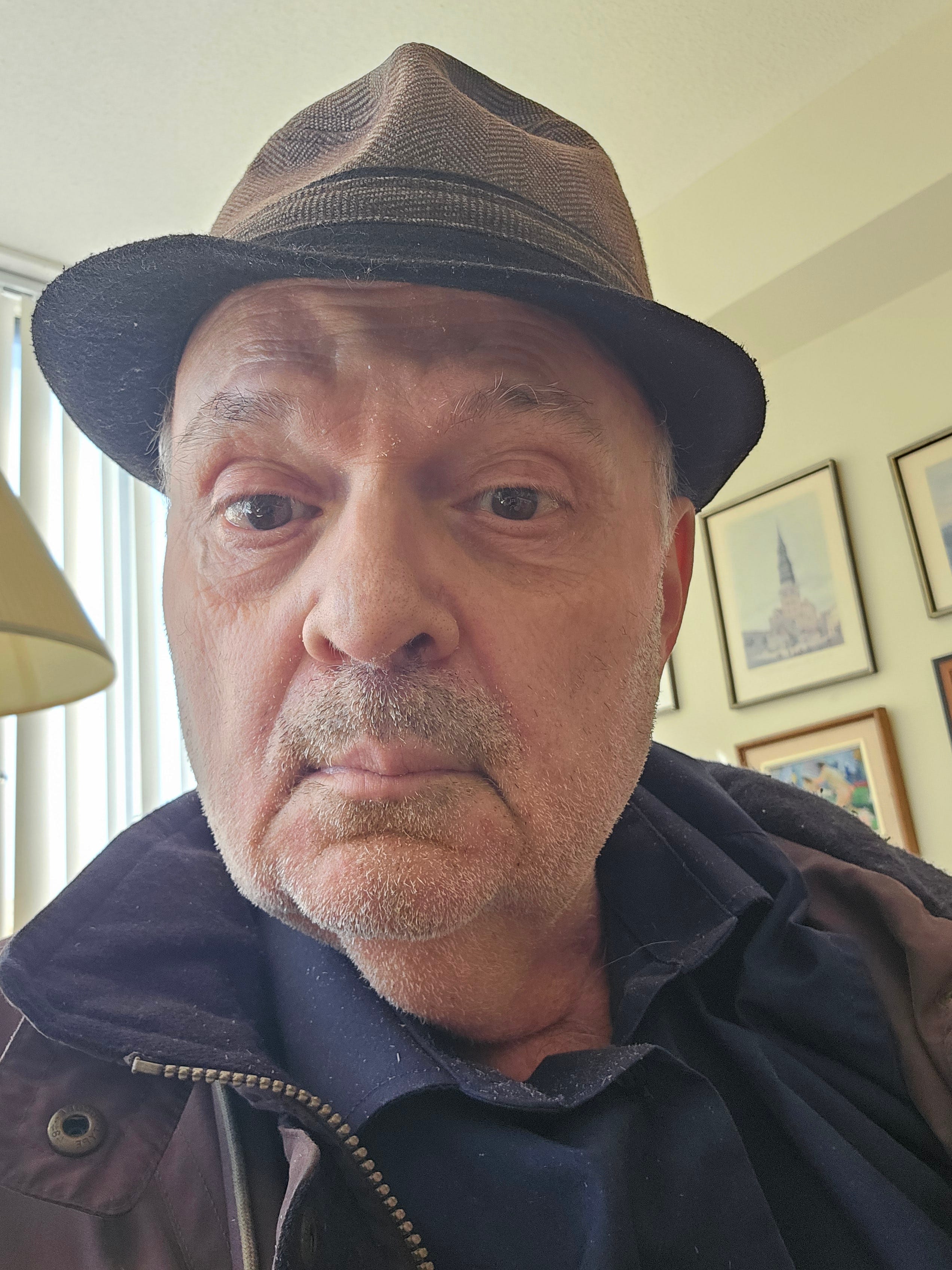
(Taken today 6 years after my cancer surgery in the same clothing I wore on March 27,2020.)
It’s a bit of an SOS with days left before rent day. About 10 new subscribers will put it over the line.
Your support keeps me housed and also allows me to preserve the legacy of Harry Leslie Smith. Your subscriptions are so important to my personal survival because like so many others who struggle to keep afloat, my survival is a precarious daily undertaking. The fight to keep going was made worse- thanks to getting cancer along with lung disease and other comorbidities which makes life more difficult to combat in these cost of living crisis times. So if you can join with a paid subscription which is just 3.50 a month or a yearly subscription or a gift subscription. I promise the content is good, relevant and thoughtful. But if you can’t it all good too because I appreciate we are in the same boat. Take Care, John