“Stay alive. It’s almost over.”

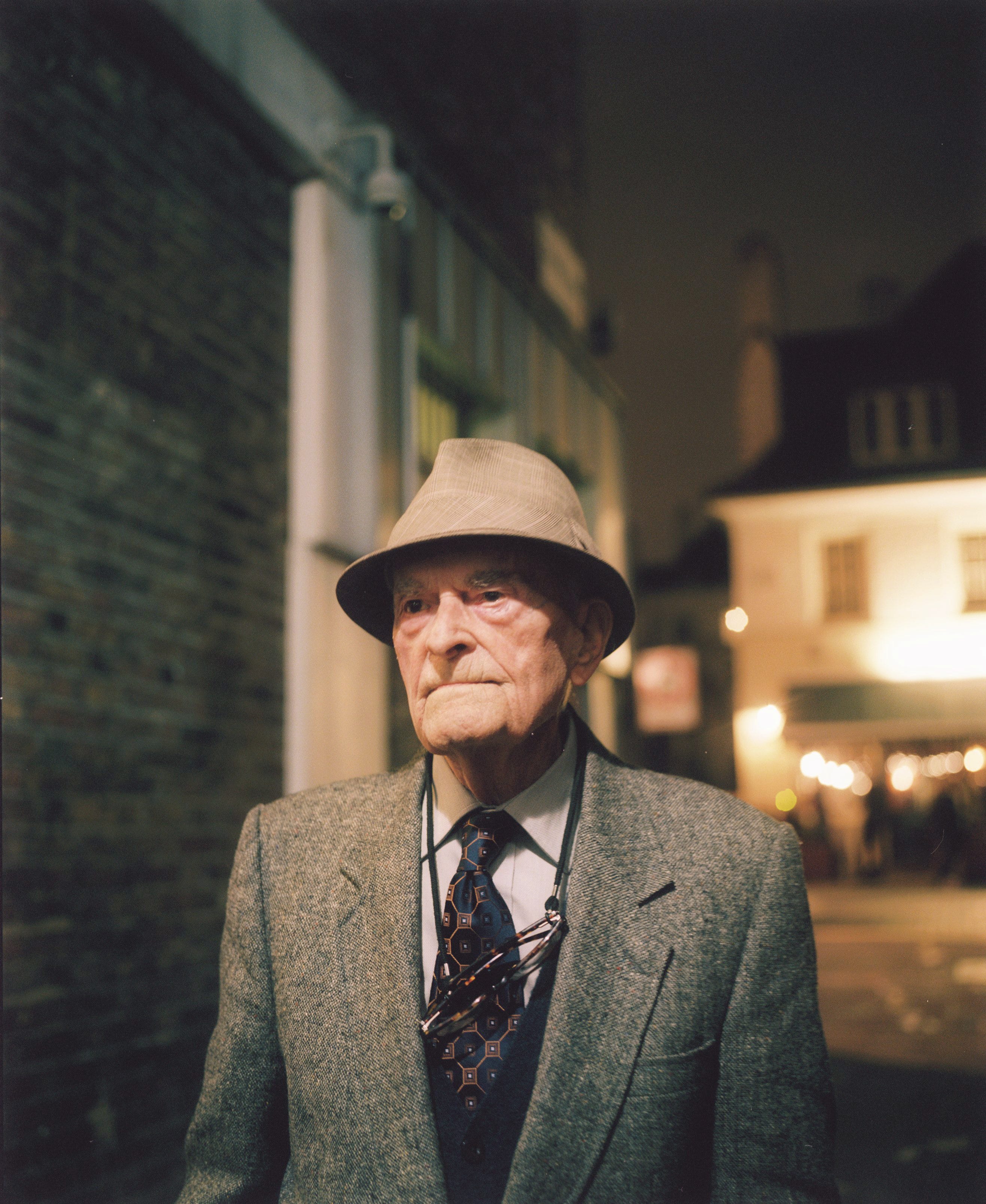
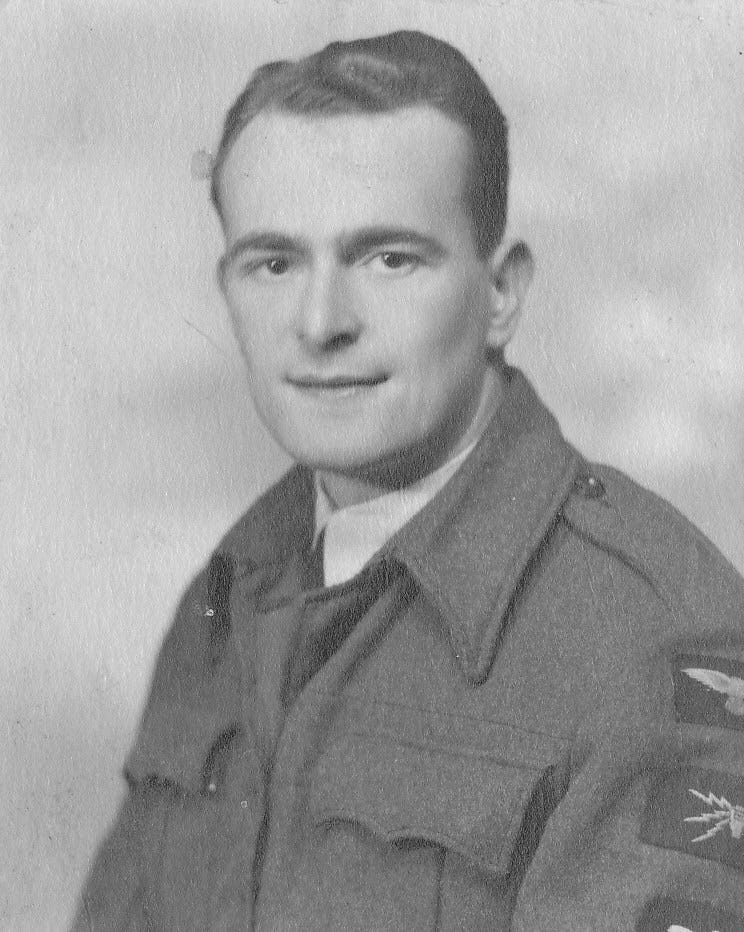
February 1945. Harry Leslie Smith and his RAF unit had been transferred from England to war-torn Europe. My father turned twenty-two that month and knew the war was almost over. If he survived, he understood the peace that followed Nazism’s defeat would not resemble the peace his father’s generation inherited in 1918.
The peace of 1945 was about to create a new social contract between the working class and capitalism. My father sensed, even at the beginning of that year, that the world awaiting his generation after Hitler’s death would be the best the working class had ever known in the Western world.
For the last eighteen months, I’ve been piecing together The Green & Pleasant Land, which was unfinished at the time of my father’s death. It covers his life from 1923 to July 1945, concluding with Attlee’s Labour Party winning the General Election.
Let me know if you’d like a copy.
Below is an excerpt from The Green & Pleasant Land. It takes place in February 1945 — eighty-one years ago — when fascism was dying, rather than today, when it flourishes like ragwort.
Chapter Thirty-Nine: Bound for War in Europe
For two years, I had stood on the edges of the war. I was near enough to feel its rude breath, yet far enough away to avoid its tentacles of death. I wasn’t sure if I’d ever be dragged into the maelstrom. The longer it dragged on, the more I came to realise I had won the lucky dip to have survived so long.
While others fought from hedgerow to hedgerow in France in 1944, I played soldier on the home front. I received news from home that my friend Roy had been wounded in the Italian campaign in August. “Shrapnel in his arse,” wrote Eric, who was still doing valuable war work as a tool-and-die maker.
Our unit was in Kent, encamped in a field near where some Cockney women and their children were harvesting a hop crop. I woke each morning to the poetic profanity of mothers bollocking their bairns for dawdling.
One afternoon, a radio message arrived ordering us to return immediately to base. We didn’t know why. When we arrived, Taffy was called into the unit commander’s office.
He was told his brother had been killed in France by a German sniper while out on patrol. That night, I heard him weeping in his sleep. He kept repeating his brother’s name; the rest was unintelligible.
Shortly before Christmas, our unit was summoned to the mess hall. A captain announced our Christmas leave was cancelled — we were to be transferred to the European theatre of war. A cheer went up. At last, the RAF was going to use us in the fight, rather than send us on more fruitless exercises.
During the wait for embarkation, the men speculated about our fate. Robbie said, “It would be a bloody shame to clock it, being this close to it all ending.” I agreed. Taffy warned that Nazi Germany was “like a rabid dog — most vicious at the point of death. Look at what happened to my brother.”
On the day we were due to board vehicles bound for the ships, our orders changed again. The Battle of the Bulge was raging, and there were fears the Western Front might collapse under Hitler’s last gamble to retake Antwerp. Our unit could hardly occupy former Luftwaffe airbases if the Allies were retreating.
So we loitered, marking time through January 1945, until fresh deployment orders arrived in the first week of February.
On a bitterly cold morning — two years after Sergeant Green had threatened us with hellfire in the desert war — my unit finally left for the port of Harwich, destination Antwerp.
It was bedlam at the docks. Whistles blasted, winches screeched, and stevedores cursed their jobs. Ships were fed guns, ammunition, petrol, and rations by cranes that swung and groaned above the decks.
Night fell before we boarded. It was well past midnight when we finally marched up the gangplank of an ageing freighter that had likely seen service in the last war.
The Navy packed us below deck like steerage passengers bound for the New World. The compartment reeked of diesel fumes and stale seawater. An hour later, the ship pulled out to sea.
Seated on the metal floor, huddled in my greatcoat, I felt the vibration of the screws beneath me as we entered the Channel. The crossing was rough. The ship pitched violently, and I spent most of the night retching into a bucket.
Between bouts of sickness, I worried about being torpedoed by one of Hitler’s few remaining U-boats. “I can’t swim — not even dog paddle,” I told Robbie. He laughed and said, “We’re stowed below the waterline. We’re as good as drowned rats if we’re hit.”
Before sunrise, the freighter reached Ostend. We disembarked like pack animals and marched toward a WAAF refreshment hut at the port’s entrance. A young woman from Glasgow served strong tea and Belgian doughnuts packed with jam.
As I left, she waved and said, “Stay alive. It’s almost over.”
Soon after, NCOs marshalled us onto an American truck bound for the front. The further we drove, the clearer it became how badly the war had scarred the Flemish countryside. Villages were reduced to rubble by artillery and tank battles fought over Christmas.
At midday, we arrived at an abandoned Luftwaffe aerodrome on the North Sea coast. Two burnt-out Panzer tanks stood at the gate, dusted with new snow.
Before retreating, the Germans had smashed the electronic and telephone equipment. The Royal Engineers had cleared the airfield of mines the day before. A warrant officer warned us, “Be bloody mindful where you walk, or you’ll be sent home in bits and pieces.”
Our job was to rebuild communications and make the runway operational within seventy-two hours.
Shortly after we took possession of the base, two German aircraft approached. From the control tower, I recognised them as Stukas and sounded the alarm. Men scrambled into the air-raid trenches the Luftwaffe had left behind.
A machine-gun nest opened fire but missed. The pilots, rattled, dropped their bombs wide. Storage sheds were destroyed, but the runway and tower survived.
The attack lasted no more than fifteen minutes, but I was terrified — and exhilarated. The adrenaline felt like a football match in which your life depended on the score.
It was much different n the night of my twenty-second birthday. Then, the base was hit by a V-2 rocket. It obliterated the runway and three aircraft parked on the tarmac.
A mechanic was killed. The explosion lit the night like daylight before water bowsers extinguished the flames. I didn’t know the man, but his death knocked the wind out of me. With the war so close to ending, I couldn’t stop thinking I might be next.
The following day, I was sent to Antwerp to collect replacement supplies. The city had also been struck by V-2 rockets the night before.
The port still smouldered. Houses had collapsed inward. Rescue crews dug for survivors. Nearby lay the bodies of dead civilians, covered with burlap sheets weighted by stones to keep the wind from lifting them.
I saw a dead horse by the roadside — killed by fright or shrapnel, I couldn’t tell. Locals were cutting meat from its flank to supplement their rations.
Soon I would learn that hunger was far worse inside Hitler’s shrinking empire, where famine was imposed as a weapon of war. What I was about to witness were crimes of such inhumanity that I would never be able to unsee them, awake or asleep.
Even after years of war, I wasn’t prepared for what awaited me in Europe. Nor did I know that those final months would irrevocably change me, just as the Great Depression had shaped my childhood.
Thank you for reading and for supporting Harry’s Last Stand. I use this Substack to preserve and promote the legacy of my father, Harry Leslie Smith, who spent the final decade of his life warning that we must not allow his past to become our future. I believe we have already crossed that territory.
If you’re able, please consider a paid subscription — £3.50 a month or £30 a year (converted to your currency). I’ve reduced the annual price by 20% to make it more accessible.
There is also a tip jar for anyone who feels inclined.
On brighter news: The Green & Pleasant Land is now complete in beta form and with publishers. It will be published this year, and everyone who helped make it possible will be acknowledged in the book.
My father’s story — and that of his working-class generation — must be remembered if we are to resist today’s fascists. If you’d like a beta e-copy, just let me know.
Take care,
John
Thank you for collecting this together. It is an amazing read.