What Would We Fight For?

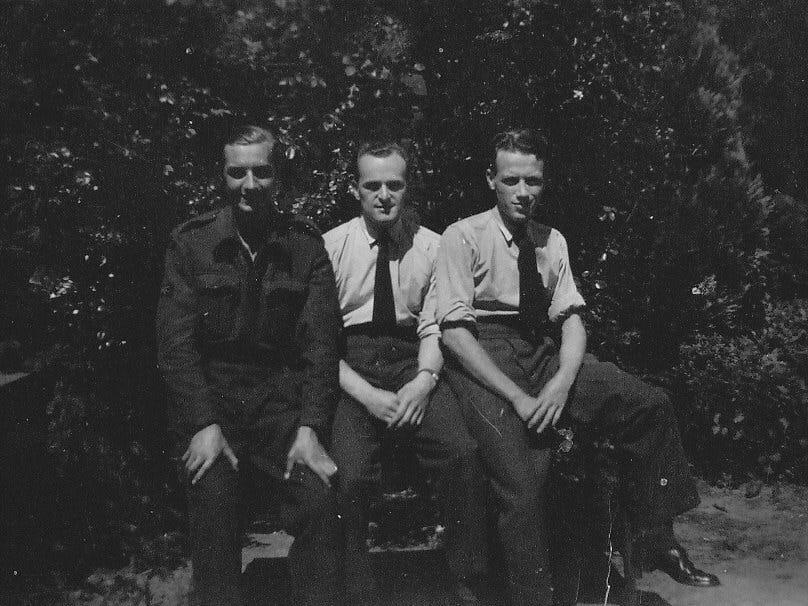
It is 2026, and politicians and the pundit class warn that war is coming. Most say it will be with China or Russia. Outliers — though perhaps the more prescient ones — suggest it may be the United States that countries like Canada or Denmark one day face on the battlefield.
But the real question is this: what would we be fighting for, whether the war is against China, Russia, or the USA?
Our right to unsustainable consumer debt? Work that fulfils neither our souls nor our pocketbooks? A xenophobia tailored to national sensibilities? Or the preservation of an eternal cost-of-living crisis? This is why the dilemma posed by fascism in 2026 may be worse for the Western world than it was for Europe in the late 1930s.
The Second World War asked extraordinary things of ordinary people who fought Nazism. It demanded obedience, endurance, danger, and loss. Young men were conscripted, disciplined, and sent into a world at war. But when the guns finally fell silent, something occurred that has never happened before or since: the IOU was paid back to the working class.
The men and women who carried the burden of war were not told they had fought “for nothing.” In Britain, they were promised a different country — one shaped by social democracy, collective responsibility, and a functioning welfare state. That promise was imperfect and fiercely contested, but it was real. It gave meaning to endurance. It turned survival into a future worth returning to.
My father’s generation did not mistake the war for a moral fairytale. They understood its brutality. But they also believed that if they submitted to discipline and danger, the peace would belong to them — not to the old elites alone, but to the people who had paid the price.
Today, we are once again told to brace ourselves. We are urged to resist, to sacrifice, to defend “the West” against looming threats. But unlike 1945, there is no social settlement on offer. No guarantee of dignity, security, or shared prosperity. Only austerity, precarity, and the steady militarisation of society, as Western democracies harden into permanent police states.
The excerpt below comes from Life on the Never Never, the third volume of Harry Leslie Smith’s The Green & Pleasant Land. It captures a moment of transition: a working-class airman leaving the RAF after seven years of service, stepping into peace with the hard-won expectation that his sacrifice meant something.
That expectation shaped a generation.
Its absence doomed our own.
Excerpt from Life on the Never Never
(The Green & Pleasant Land, Volume III)
On the morning of my appointment with the adjutant, the sky above Lancashire stubbornly remained the colour of flint. It hovered low over the parade ground, ready to open up and weep cold rain at the slightest provocation. The temperature wasn’t yet warm enough, but I felt the approach of spring. A breeze blowing in from the south was more kind than harsh on my face and gloveless hands. It was the second week of March; winter was nearly done, and I hoped a new season had dawned for me.
A clerk ushered me into my meeting with the adjutant. The sergeant who had found my requests for my wife Friede’s repatriation troublesome was also present. My commanding officer sat behind a fastidiously arranged desk, its surface free of clutter except for two telephones and a small family photograph in a silver frame at the edge. There was also a thin folder containing my service record: a list of postings, my wireless training, and my RAF performance ratings since my induction in 1941.
I saluted. They returned it with less enthusiasm and instructed me to sit. The NCO remained standing while the adjutant began making notes on a sheaf of paper. For a moment, I wondered if they had forgotten I was there at all.
My attention drifted to a large portrait on the wall behind the adjutant’s desk. George V looked stern but fatherly. I thought, Your Highness, you’d better not have any complaints — I think I’ve done enough for you and your family. The thought vanished as the adjutant cleared his throat.
“The sergeant tells me you want out of the RAF?”
Looking at both of them, I knew it was sink or swim time.
“Yes, sir.”
The NCO interrupted, asking permission to question me. The adjutant nodded. The sergeant spoke in a hostile, condescending tone.
“Didn’t you re-enlist for three more years last September?”
“I did.”
“Then why do you want out of the RAF? Was it something we said?”
I replied politely. “It was a mistake to take the extra duty. I now realise I’m too old for the rigours of service required by the RAF.”
“Too old, Smith?” the sergeant barked. “I’ve got pimples on my arse older than you.”
“I think,” the adjutant said, cutting in, “we’re getting away from the point. You are legally obligated to fulfil your service with the King.”
“Unless you get killed,” the sergeant added.
I paused. Bugger the sergeant. He has my number, but he doesn’t choose my fate today.
“It states quite specifically in the regulations that within the first six months of the agreement, either party may opt out of the remainder of the contract without penalty — except repayment of the bonus.”
“So you haven’t spent it on beer and dolly girls?” the sergeant sneered.
“No, sir. The twenty pounds are in my pocket, ready to be returned.”
I reached for it, but the adjutant shook his head.
“Not now, Smith. Let me see the extension papers.”
He read them carefully.
“You’re cutting it a bit thin, aren’t you? Your six-month grace period is almost up.”
I offered a half-hearted apology, not mentioning that the delay was caused by waiting for Friede’s repatriation.
He handed the papers back.
“We won’t keep you if you don’t wish to be kept. Your record,” he said, touching the file, “rates you as a superior aircrewman. No stains in your copy book. I won’t put up a fuss.”
“Thank you,” I said, smiling.
“Hold off on that grin,” he replied. “I expect you’ll remember us fondly once you’re back on civvy street.”
“Perhaps. When will that be?”
“Your six-month anniversary — March sixteenth.”
“That’s two days away,” the sergeant said.
The adjutant looked at him, then back at me.
“Any difficulty clearing this in forty-eight hours?”
“No, sir.”
“Good. No point wasting a farthing on excess personnel.”
Then, with a sneer, he added, “This new government — the one your lot voted in.”
“You mean Prime Minister Attlee?”
“Yes. Hell-bent on bankrupting the services. So fly the coop. You’ll need luck in this New Britain your people created.”
A silence fell, like a coffin being lowered into a grave.
The adjutant dismissed me.
“The sergeant will see to your discharge.”
I saluted and left as quickly as I’d entered.
Back on the parade square, I led my squad to dismantle electronic equipment for one final day. It is all over now, I thought — elated and despondent in equal measure. Since enlisting in 1941, I had grown up in body and mind while civilisation clashed across the world.
I had saluted hundreds of officers and NCOs, from sunrise to sunset, across Britain, Belgium, Holland, and into occupied Germany. My hand had risen to the brim of my cap and fallen again thousands of times — most of them with little belief, more ritual than conviction. Like communion as a boy, the motions were meant to demonstrate obedience to an unseen authority and avert punishment.
Yet unlike the church, the RAF had been an honourable tribe. I was proud to have served. It had prepared me for an uncertain peace. I entered the Air Force callow and naïve; I left with a destiny — not fame or wealth, but what had been denied my kin in Yorkshire for generations: love, financial stability, and purpose beyond hewing coal from the earth. The RAF had turned me into a combatant. I was ready to defend my dignity and my family’s rights in civilian life.
On my final day, I packed quickly. At the paymaster’s office, I received a few pounds and coppers. Then I was ordered to the supply hut.
In the cold hut, a clerk told me to strip to my underpants while he logged each returned item. He sized me up.
“We’ve got brown or brown.”
“I’ll take the brown.”
He handed me a thin, single-breasted suit that felt woven from horsehair.
My papers were signed. I was discharged with the same emotion one might show shipping a lorry of beans back to the factory.
A sergeant gave me a final once-over.
“That’s sorted. Off you go.”
My last day at Ringway was much like my first at Padgate — alone, among strangers. At the gates, the guard glanced at my papers, smiled, and handed them back.
“Terra.”
I walked away with long strides. Somewhere behind me, a sergeant barked an order. The voices faded as I went, until all I heard was my own breathing.
The road ahead was empty, but I was not disappointed. I was going to gather my wife Friede. My path was clear, even if it led back to my past — to my mother and her terraced house in Halifax. Britain’s destiny, for the first time in history, was now in the hands of the working class.
A Note From Me
For the past eighteen months, I’ve been finishing The Green and Pleasant Land — the book my dad never had the chance to complete. It’s now finished and ready to find its audience. If you’d like a beta copy, just send me a DM.
Like so many others, my survival is a precarious daily undertaking — made harder by cancer, lung disease, and the cost-of-living crisis. If you can, please consider a paid or gift subscription — just £3.50 a month or £30 a year (converted automatically to your currency). The price has stayed the same for all four years and will continue to do so.
There’s also a tip jar if that’s your preference.
Your support keeps me housed and helps preserve the legacy of Harry Leslie Smith — a voice that still matters in this era of political amnesia.
If you can’t contribute, that’s fine too. We’re all in the same boat. Please share this Substack so it reaches its widest possible audience.
Take care,
John
Because they are going to engineer it. Whenever the calls to tax the rich get too loud, it's back to default = war. Suddenly the magic money tree will yield the richest of harvests - for the psychopaths in charge. Yes, they are evil, but so are those who voted for them.
A wonderfully crafted excerpt...your father's brutal, unsparing honesty and your contextualization to the current moment are masterful.